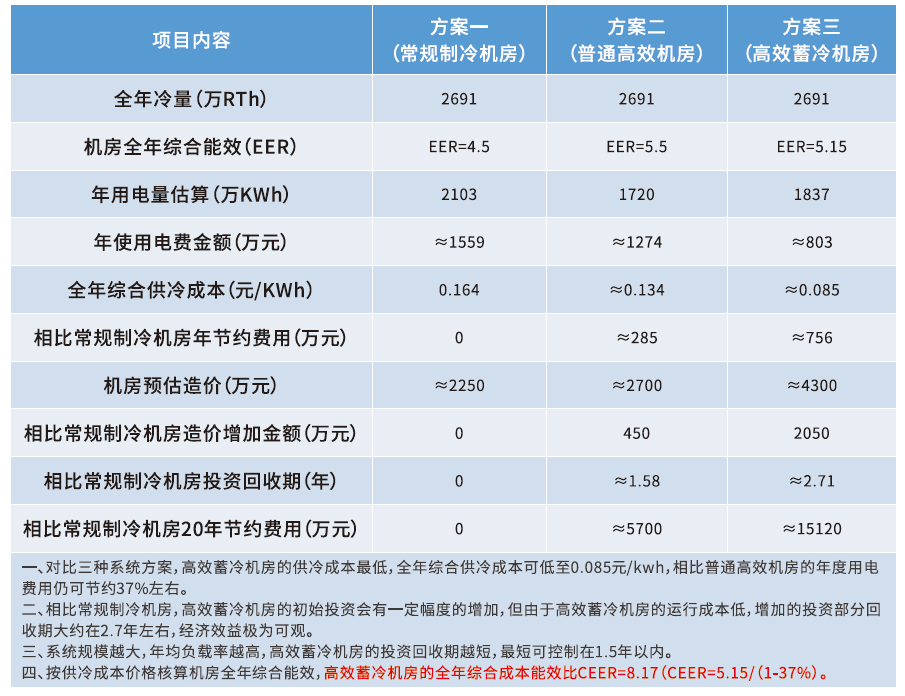
● Air-conditioning systems account for approximately 20% of China’s total electricity consumption and continue to grow year by year. However, the energy efficiency of existing cooling plants remains generally low, leaving significant potential for energy savings.
● Electricity demand on the demand side fluctuates substantially across different time periods, with peak-to-valley load differences reaching 40%–60%. Urban power grids are facing increasing pressure during peak demand periods, while surplus electricity during off-peak nighttime hours is becoming more prevalent, resulting in severe energy imbalance and energy waste.
● China’s carbon reduction commitment aims to achieve carbon emissions peaking before 2030 and carbon neutrality before 2060, placing considerable emphasis on energy conservation and carbon reduction.
● In 2019, seven national ministries jointly issued the Green and High-Efficiency Cooling Action Plan, requiring a more than 30% improvement in cooling efficiency for large public buildings and an overall improvement of more than 25% in cooling system energy efficiency by 2030.
● On July 29, 2021, the National Development and Reform Commission (NDRC) issued the Notice on Further Improving the Time-of-Use Electricity Pricing Mechanism, which stipulates that the peak-to-valley electricity tariff ratio should generally be no less than 4:1. The policy also promotes a critical peak pricing mechanism, under which critical peak tariffs should be at least 20% higher than standard peak-period tariffs.
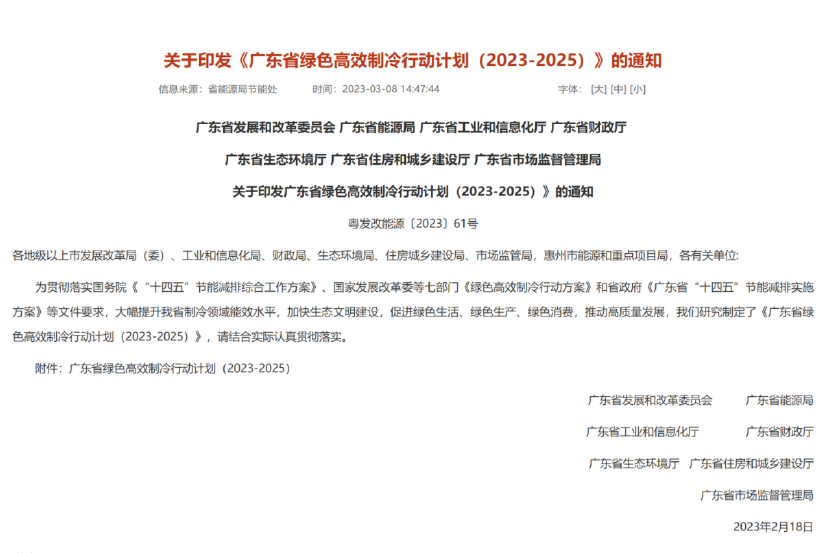
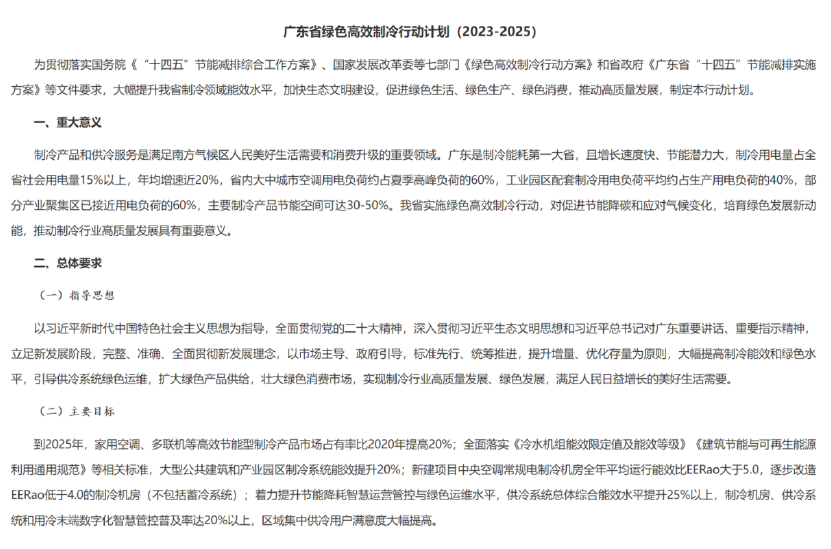
● In 2023, seven provincial departments in Guangdong jointly issued the Guangdong Green and High-Efficiency Cooling Action Plan, requiring a 20% improvement in cooling system energy efficiency for large public buildings and industrial parks. For newly constructed projects, the annual average operating Energy Efficiency Ratio (EERa₀) of conventional electrically driven central cooling plants must exceed 5.0, while existing cooling plants with EERa₀below 4.0 are to be progressively upgraded (excluding thermal energy storage systems).
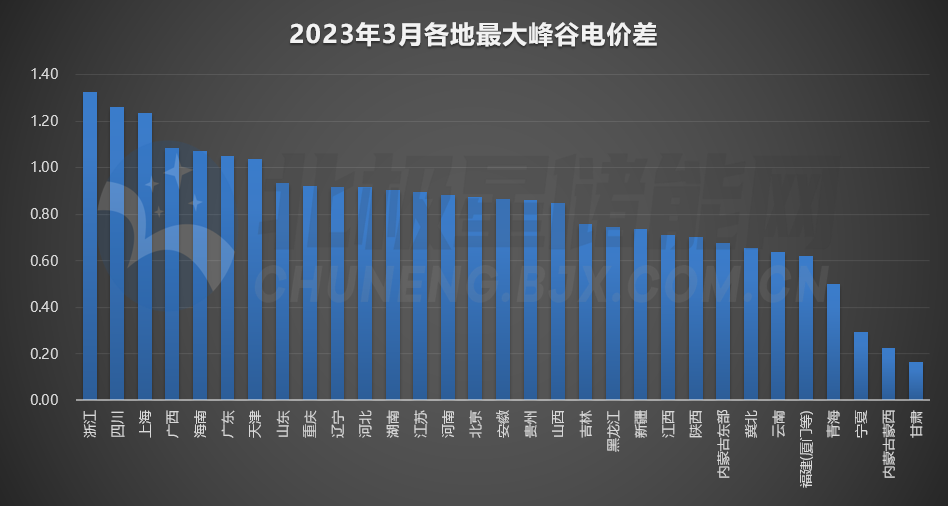
● As of 2023, more than 23 provinces and municipalities across China have peak-to-valley electricity price differentials exceeding RMB 0.70/kWh, with the highest reaching RMB 1.33/kWh.